
Why Am I Feeling Emotionally Drained Lately?
Modern life has quietly created a generation running on empty. People are sleeping but still waking up tired. They are socializing but still feeling lonely. They are working harder than ever, yet struggling to feel emotionally fulfilled. According to recent Google Trends reports, searches for terms like “burnout symptoms,” “feel overwhelmed,” and “emotional flooding” have reached record highs in 2026.
If you’ve been asking yourself, “Why do I feel emotionally drained lately?” you are far from alone.
What makes emotional exhaustion difficult is that it often arrives silently. It does not always look like a dramatic breakdown. Sometimes it feels like losing excitement for things you once loved. Sometimes it feels like mental fog, irritability, emotional numbness, or constant overstimulation. Many people continue functioning normally on the outside while internally carrying heavy emotional fatigue every single day.
This article explores the hidden causes of emotional exhaustion, the modern habits contributing to low emotional energy, the connection between stress and spirituality, and practical ways to recover from emotional burnout before it consumes your mental and emotional well-being.
Understanding Emotional Exhaustion
What Does It Mean to Feel Emotionally Drained?
Being emotionally drained is different from simply having a bad day. It feels like your emotional battery never fully recharges, no matter how much rest you try to get. You may wake up already exhausted, struggle to feel motivated, or become emotionally overwhelmed by situations that once felt manageable. Even basic conversations or daily responsibilities can begin feeling mentally heavy. Many people describe it as carrying invisible emotional weight that follows them everywhere.
Psychologists often describe emotional exhaustion as a state caused by prolonged emotional stress, chronic overwhelm, or constant psychological pressure. According to recent mental health research and trend reports, searches related to emotional burnout and stress have surged globally in 2026. This rise reflects how modern lifestyles are pushing people into constant emotional overstimulation without adequate recovery.
The dangerous part is that emotional fatigue builds gradually. It rarely appears overnight. At first, it may look like mild irritability or reduced motivation. Over time, it can develop into deeper symptoms like anxiety, emotional numbness, hopelessness, and disconnection from life itself. People often ignore these warning signs because society normalizes being “busy” and emotionally overloaded.
Think of emotional energy like a smartphone battery running dozens of apps in the background. Even when you are not actively doing something stressful, unresolved emotions, overthinking, social pressure, and digital stimulation continue draining your internal energy quietly throughout the day.
Emotional Exhaustion vs Physical Tiredness
Many people confuse feeling emotionally tired with physical fatigue. Physical tiredness usually improves after quality sleep or rest. Emotional exhaustion behaves differently. You may sleep eight hours and still wake up mentally exhausted because the root issue is psychological overload rather than physical activity.
One of the clearest differences is how emotional fatigue affects your reactions to life. Small inconveniences start feeling enormous. You become impatient faster. Social interaction begins feeling draining instead of energizing. Even activities you once enjoyed may suddenly feel meaningless or emotionally distant. According to medical experts, common mental exhaustion symptoms include emotional detachment, reduced motivation, difficulty concentrating, cynicism, and chronic overwhelm.
Physical symptoms often appear alongside emotional burnout too. Headaches, muscle tension, insomnia, digestive problems, and constant fatigue are surprisingly common. The mind and body are deeply connected. When emotional stress stays trapped inside the nervous system for too long, the body eventually begins expressing that stress physically.
A useful analogy is imagining your mind as an overloaded internet browser with hundreds of tabs open simultaneously. The system slows down, freezes, and overheats even if you are technically “resting.” That is exactly what emotional overload does to the nervous system.
Why Emotional Fatigue Is Rising in Modern Life
Digital Overstimulation and Constant Mental Noise
Human beings were never designed to absorb endless streams of information every waking moment. Yet modern life demands exactly that. From the second people wake up, they are bombarded with notifications, reels, emails, messages, news updates, advertisements, and endless digital stimulation. Many individuals no longer experience genuine mental silence.
This constant cognitive stimulation is contributing heavily to low emotional energy and mental exhaustion. Recent online discussions and Google Trends reports show rising concerns about overstimulation, emotional flooding, and burnout caused by excessive digital engagement. People are increasingly realizing that constant screen exposure fragments attention and leaves the nervous system permanently activated.
Social media especially creates emotional fatigue because it forces the brain into nonstop comparison, emotional processing, and dopamine cycling. Your brain is constantly switching between emotional states within seconds: humor, outrage, sadness, motivation, fear, envy, excitement. Over time, this emotional whiplash drains psychological resilience.
The scary part is that overstimulation has become normalized. Many people cannot eat, relax, or even sit quietly without background entertainment. Silence now feels uncomfortable because the nervous system has become addicted to constant stimulation. Unfortunately, that same stimulation prevents emotional recovery from occurring naturally.
Hustle Culture and Chronic Stress
Another major reason people feel emotionally exhausted is the modern obsession with productivity. Hustle culture has convinced many individuals that rest equals laziness and constant busyness equals success. People push themselves endlessly while ignoring emotional warning signs until burnout eventually takes over.
According to workplace burnout reports published in 2026, search interest in phrases like “burnout symptoms” and “stress symptoms” has reached historic highs. Workers increasingly report emotional fatigue caused by workload pressure, job insecurity, financial stress, and the inability to disconnect from work mentally.
Burnout is not simply about working hard. It is about working without emotional recovery. Many people spend years operating in survival mode. They become emotionally available for everyone except themselves. They continue producing, responding, performing, and multitasking while their nervous systems quietly deteriorate underneath.
Modern culture often rewards overextension. Being exhausted has become a status symbol. People proudly announce how busy they are while privately feeling emotionally overwhelmed inside. Eventually, the nervous system stops cooperating. Motivation disappears. Emotional numbness develops. Joy becomes difficult to access.
This is why emotional burnout often feels confusing. People wonder why they feel mentally exhausted even when they are technically succeeding in life. The answer is simple: achievement without emotional balance eventually becomes psychologically unsustainable.
Common Signs of Emotional Burnout
Mental Exhaustion Symptoms You Should Not Ignore
One of the biggest problems with emotional burnout is that many people fail to recognize it early. Emotional exhaustion rarely arrives dramatically. Instead, it slowly changes how you think, react, and experience daily life. The signs are subtle at first but become increasingly disruptive when ignored.
Some of the most common signs of emotional burnout include persistent irritability, emotional numbness, lack of motivation, overthinking, anxiety, brain fog, and difficulty concentrating. According to mental health experts, emotionally exhausted individuals often feel detached from activities they once enjoyed. You may begin avoiding conversations, withdrawing socially, or feeling emotionally disconnected even around loved ones.
Another overlooked symptom is constant emotional sensitivity. Small inconveniences suddenly trigger disproportionate frustration or sadness. Your emotional tolerance decreases because your nervous system is already overloaded. It is like trying to pour water into a cup that has already reached capacity.
Many people also experience “functional exhaustion.” They continue going to work, replying to messages, and fulfilling responsibilities, but internally feel emotionally empty. This silent burnout has become incredibly common in modern society. Recent online discussions reveal how many individuals feel emotionally disconnected while still appearing functional externally.
If these patterns remain unaddressed, emotional fatigue can evolve into deeper psychological distress. That is why recognizing emotional burnout early is essential for long-term mental health.
Physical Symptoms Linked to Emotional Fatigue
Emotional stress does not stay trapped in the mind. It eventually shows up in the body too. Chronic emotional exhaustion activates the body’s stress response repeatedly, flooding the nervous system with stress hormones like cortisol and adrenaline. Over time, this creates physical wear and tear.
Common physical symptoms include headaches, insomnia, digestive discomfort, low immunity, body tension, chest tightness, chronic fatigue, and appetite changes. According to medical experts, emotional burnout can also contribute to recurring illnesses because chronic stress weakens immune system functioning.
Sleep problems are particularly common among emotionally overwhelmed individuals. Many people feel exhausted but struggle to experience deep restorative rest because their nervous systems remain hyperactive. Their minds continue processing stress even during sleep.
Emotional fatigue can also create emotional numbness toward the body itself. Some individuals stop noticing how tense or exhausted they truly are because chronic stress has become their “normal.” They ignore warning signs until the body eventually forces them to stop through illness, panic attacks, or severe burnout.
The body always keeps score of emotional overload. Ignoring emotional exhaustion for long periods is similar to ignoring engine warning lights in a car. Eventually, the system breaks down.
Hidden Causes Behind Feeling Emotionally Tired
Unprocessed Emotions and Emotional Suppression
One major reason people experience emotional fatigue is emotional suppression. Many individuals spend years ignoring grief, anger, disappointment, trauma, heartbreak, or emotional pain because they believe they must stay strong. But emotions that remain unprocessed do not disappear. They stay stored within the nervous system.
Suppressed emotions quietly consume emotional energy. Even if you are not consciously thinking about them daily, the body continues carrying their psychological weight. Over time, this creates emotional heaviness, numbness, and internal exhaustion.
Modern society often encourages emotional avoidance. People distract themselves through scrolling, work, entertainment, or constant stimulation instead of sitting with difficult emotions. Unfortunately, avoidance delays healing. Emotional suppression is like repeatedly shoving clutter into a closet without cleaning it. Eventually, the pressure becomes impossible to contain.
Many emotionally exhausted individuals are not weak. They are emotionally overloaded from carrying unresolved pain silently for too long.
Relationship Stress and Emotional Imbalance
Relationships significantly influence emotional energy. Toxic relationships, emotional inconsistency, poor communication, constant conflict, or emotional dependency can drain the nervous system deeply. Even relationships that appear normal externally may become emotionally exhausting when emotional needs remain unmet consistently.
People often underestimate how much emotional labor they perform daily. Constantly managing other people’s emotions, avoiding conflict, overthinking conversations, or trying to maintain peace can become mentally exhausting over time.
Emotional burnout also happens when people continuously give emotional support without receiving emotional nourishment in return. This imbalance creates resentment, fatigue, and emotional depletion.
Healthy relationships should not constantly feel like emotional survival. They should create emotional safety, support, and psychological stability rather than chronic stress.
Financial Anxiety and Career Pressure
Financial uncertainty has become another major contributor to emotional exhaustion globally. Rising living costs, unstable job markets, social comparison, and career pressure create chronic stress that quietly affects emotional health.
Recent workplace studies reveal increasing emotional burnout linked to economic anxiety and workload pressure. Many individuals feel trapped between survival responsibilities and emotional well-being.
Career stress becomes particularly dangerous when personal identity becomes fully attached to productivity. People start measuring self-worth entirely through achievement, performance, or income. When exhaustion appears, they blame themselves instead of recognizing unsustainable pressure.
Constant survival mode prevents emotional recovery because the nervous system never feels safe enough to relax completely.
The Link Between Emotional Exhaustion and Spirituality
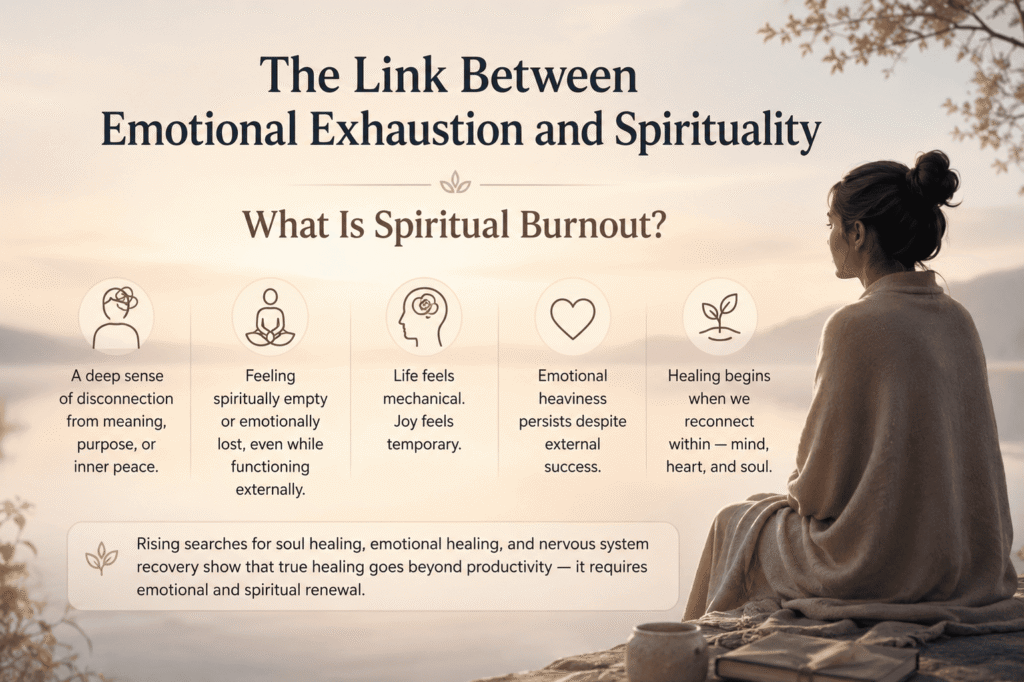
What Is Spiritual Burnout?
Not all exhaustion is physical or mental. Some exhaustion feels deeper – almost existential. This is often called spiritual burnout.
Spiritual burnout happens when individuals feel disconnected from meaning, purpose, inner peace, or emotional alignment. People may continue functioning externally while internally feeling spiritually empty or emotionally lost.
Many individuals experiencing emotional exhaustion and spirituality struggles describe feeling disconnected from themselves. Life begins feeling mechanical. Joy feels temporary. Emotional heaviness persists despite external success.
In recent years, searches related to soul healing, emotional healing, and nervous system recovery have risen significantly. This reflects a growing awareness that emotional burnout is not always solved through productivity hacks alone. Sometimes deeper emotional and spiritual healing is required.
Emotional Exhaustion and Spiritual Disconnect
Emotional exhaustion often creates spiritual disconnection because survival mode narrows human awareness. When people constantly operate under stress, they lose touch with reflection, creativity, intuition, and emotional presence.
Many emotionally overwhelmed individuals stop engaging with activities that once made them feel emotionally alive. They may lose connection with nature, spirituality, hobbies, relationships, or inner stillness.
This spiritual fatigue does not necessarily relate to religion. It often reflects emotional disconnection from meaning and emotional authenticity.
Healing requires more than rest sometimes. It requires emotional reconnection with yourself.
How Technology Is Affecting Emotional Energy
Social Media Fatigue and Dopamine Overload
Social media platforms are engineered to capture attention continuously. Every notification, reel, and scroll triggers dopamine responses within the brain. While these micro-rewards feel stimulating temporarily, excessive consumption eventually exhausts emotional processing systems.
Many people now experience emotional numbness because their brains rarely receive stillness anymore. Constant emotional stimulation reduces the nervous system’s ability to recover naturally.
Recent online discussions reveal increasing awareness about digital overstimulation contributing to emotional burnout and mental exhaustion. People increasingly recognize how fragmented attention affects emotional stability.
Why Your Brain Never Truly Rests
True mental rest has become rare. Even during breaks, many individuals continue consuming digital content nonstop. The brain never fully disengages from stimulation.
This constant engagement keeps stress pathways active. Emotional processing becomes overloaded. Overthinking increases. Sleep quality decreases.
The result is a generation physically resting but psychologically overstimulated.
How to Recover From Emotional Exhaustion
Rebuilding Emotional Energy Slowly
Recovery from emotional burnout is not instant. Emotional healing behaves more like recovering from dehydration than flipping a switch. The nervous system requires consistent restoration over time.
Start by reducing unnecessary emotional input. Protect your mental environment carefully. Spend less time consuming emotionally draining content. Prioritize emotionally safe relationships. Create quiet moments without stimulation.
Small changes matter enormously when rebuilding emotional energy.
Nervous System Recovery and Rest
Recent wellness discussions increasingly focus on nervous system regulation because chronic stress keeps the body trapped in survival mode. Recovery requires teaching the body that it is safe again.
Activities like deep breathing, meditation, journaling, walking in nature, proper sleep, reduced screen exposure, and emotional expression help regulate the nervous system gradually.
Rest is not laziness. It is biological maintenance for emotional survival.
Small Daily Habits That Help Emotional Healing
A few powerful daily habits include:
- Limiting screen time before bed
- Spending time in silence
- Practicing emotional awareness
- Setting emotional boundaries
- Prioritizing sleep quality
- Taking breaks without guilt
- Reconnecting with hobbies
- Seeking emotional support
Healing emotional exhaustion requires consistency rather than perfection.
When Emotional Burnout Requires Professional Support
Sometimes emotional exhaustion becomes too heavy to manage alone. If symptoms persist for weeks or interfere with daily functioning, professional mental health support may be necessary.
Therapists can help identify deeper causes behind chronic emotional fatigue, unresolved trauma, anxiety, or depression. Seeking help is not weakness. It is emotional responsibility.
Burnout recovery often becomes faster and healthier with proper emotional support systems in place.
Conclusion
If you have been wondering, “Why am I mentally exhausted?” the answer is rarely simple. Emotional exhaustion is usually the result of accumulated stress, emotional overload, unresolved feelings, overstimulation, relationship pressure, and chronic nervous system fatigue.
Modern life has normalized emotional depletion to the point where many people no longer recognize it. But constantly feeling emotionally drained is not something you should ignore.
Your exhaustion is not laziness.
Your overwhelm is not weakness.
Your emotional fatigue is information.
The mind and body eventually ask for what they have been denied for too long: rest, emotional honesty, balance, safety, and healing.
Listening to those signals early may prevent emotional burnout from becoming something much deeper.
Pingback: Why Sensitive People Feel Tired Around Certain Energies