
Signs Your Home Energy Is Affecting Your Mood
Modern life has made people more emotionally aware than ever before. Many individuals now notice that their emotional state changes depending on the environment they spend time in. You may walk into your house after a long day and suddenly feel exhausted, irritated, anxious, or emotionally heavy without understanding why. That strange emotional shift is not always “just stress.” In many cases, your surroundings may be influencing your mental and emotional well-being far more than you realize. Researchers studying indoor environments, clutter, soundscapes, lighting, and psychological wellness have repeatedly found strong links between home conditions and emotional health.
People often search questions like “why my mood changes at home suddenly” or “why I feel emotionally drained at home” because the experience feels real and difficult to explain. A house is not merely a physical structure. It absorbs habits, emotions, routines, arguments, stress, memories, and even sensory experiences like lighting, sound, smell, and air quality. Over time, these factors shape how safe, relaxed, motivated, or emotionally trapped you feel. When your living environment becomes emotionally heavy, your nervous system reacts to it continuously, even if you are not consciously aware of the trigger.
Psychologists and environmental researchers now acknowledge that the built environment directly impacts stress levels, mood regulation, sleep quality, focus, and emotional balance. This means your home can either recharge you like a sanctuary or drain you like an invisible emotional weight tied to your shoulders. Understanding the signs is the first step toward creating a healthier emotional atmosphere inside your living space.
Understanding the Connection Between Home Energy and Emotions
What Does “Home Energy” Really Mean?
When people hear the phrase “home energy,” they often think about spirituality alone, but the concept is much broader and deeply psychological. Home energy refers to the emotional atmosphere created by your surroundings, habits, interactions, sensory inputs, and memories attached to a space. Think about how different a hospital feels compared to a peaceful café or a cozy childhood room. The walls are not magically emotional, yet your nervous system reacts differently in each environment. Your brain constantly scans surroundings for safety, comfort, stimulation, and stress signals. That process shapes your mood even before you consciously recognize it.
This explains why many people experience “signs your home energy is affecting your emotions” without having a logical explanation. A cluttered room can create mental overstimulation. Dark lighting may lower motivation and affect circadian rhythm. Constant noise can keep the nervous system in fight-or-flight mode. Emotional conflict between family members can linger psychologically inside shared spaces. Over time, these experiences build an emotional imprint inside the home environment.
Research from recent studies on indoor environments and psychological well-being found that lighting, sound conditions, crowding, air quality, and perceived safety all influence emotional states and cognitive functioning. In simple terms, your house can either support emotional regulation or silently contribute to emotional imbalance. That is why some homes instantly feel calming while others feel emotionally exhausting even if they look aesthetically beautiful.
How Your Environment Influences Mental Health
The relationship between physical spaces and mental health is stronger than most people imagine. Humans are biologically designed to respond to environmental cues. Natural sunlight influences serotonin and sleep cycles. Clean air affects energy levels and brain performance. Organized spaces reduce cognitive overload. Pleasant sounds calm the nervous system. On the other hand, clutter, noise, poor ventilation, darkness, and chaotic surroundings increase stress hormones and mental fatigue.
A 2025 review on indoor environmental quality highlighted that built environments directly affect happiness, irritability, stress, concentration, and emotional well-being. Another 2026 study showed that natural soundscapes and calming home environments significantly improved psychological recovery from stress compared to harsh urban sound environments. These findings help explain why some people constantly ask, “can home energy affect your mood and mental peace?” The answer is yes, both psychologically and physiologically.
Your home becomes especially influential because it is the place where your nervous system expects recovery. If your living environment feels emotionally heavy instead of restorative, your mind never fully relaxes. It is similar to trying to recharge a phone using a damaged charger. You may technically be resting at home, but emotionally you continue losing energy. Over time, this creates irritability, burnout, emotional exhaustion, sleep problems, and even relationship tension.
Why You Suddenly Feel Different Inside Your Home
Why My Mood Changes at Home Suddenly
Many people notice an unsettling pattern: they feel fine outside but emotionally uncomfortable the moment they enter their house. This leads to searches like “why my mood changes at home suddenly” or “why I feel irritated at home for no reason.” The emotional shift often feels immediate and confusing. One explanation is that your nervous system associates certain spaces with unresolved emotional experiences. Even if you are not consciously thinking about stress, your brain remembers emotional patterns connected to the environment.
Imagine walking into a room where arguments frequently happen. Even in silence, your body may still hold tension associated with that space. Similarly, cluttered environments constantly remind the brain about unfinished tasks, responsibilities, or lack of control. Researchers and psychologists have noted that visual clutter increases mental load and stress perception. This creates emotional overstimulation without you realizing it.
Another factor is sensory exhaustion. Homes with poor lighting, loud sounds, stale air, or overwhelming visual stimulation subtly drain emotional energy throughout the day. Instead of calming your nervous system, the environment keeps it activated. That is why some individuals feel mentally peaceful in parks, cafés, or outdoor spaces but emotionally tense inside their own homes. The contrast becomes impossible to ignore.
Emotional Triggers Hidden Inside Living Spaces
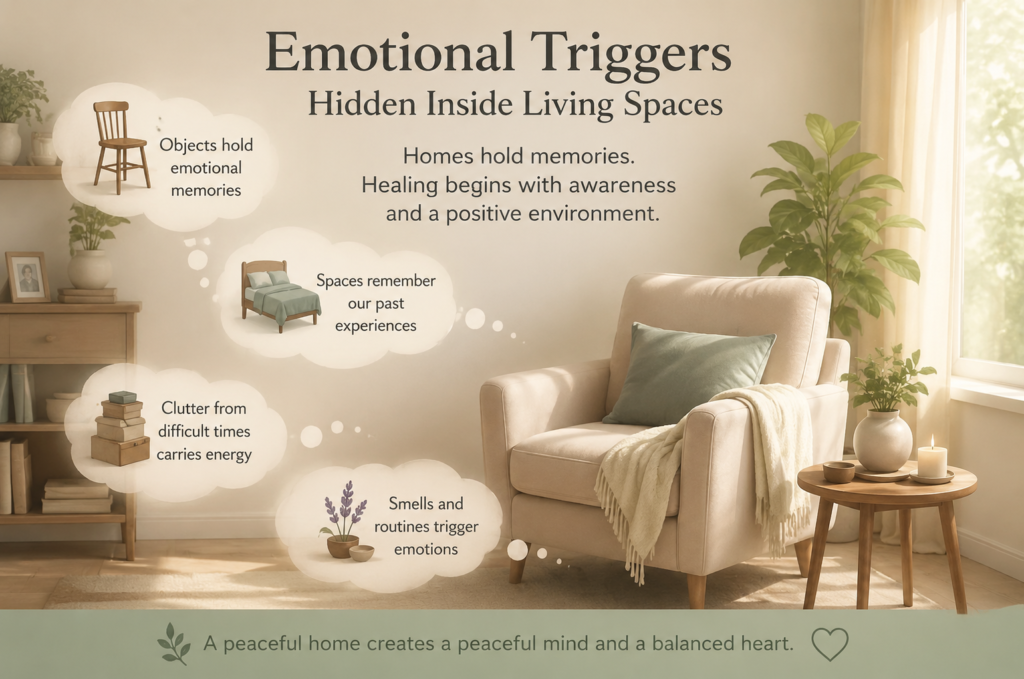
Every home carries emotional memory. Certain objects, corners, smells, and routines trigger subconscious emotional responses tied to past experiences. A chair where stressful conversations occurred, a bedroom associated with loneliness, or even inherited clutter from difficult periods in life can become emotional anchors. Your conscious mind may not focus on them, but your emotional system remembers.
This is one reason behind “negative home energy causing emotional imbalance.” The issue is not always mystical. Often, it is psychological conditioning mixed with environmental stressors. Studies on housing conditions and mental health show that improving indoor environments can significantly improve emotional wellness. The emotional atmosphere of a home matters because humans form deep psychological attachments to spaces.
Some people also absorb emotional tension from others living in the house. Homes filled with criticism, anger, silence, resentment, or emotional instability create emotionally heavy environments. Reddit discussions on environmental psychology frequently describe experiences of feeling “lighter” after decluttering or after emotionally tense individuals leave a shared space. While anecdotal, these experiences reflect a common psychological reality: environments deeply influence emotional states.
Major Signs Your Home Energy Is Affecting Your Emotions
Constant Irritation Without Clear Reason
One of the biggest warning signs is unexplained irritability. You may feel emotionally reactive, impatient, or angry at home without understanding the trigger. Small things suddenly feel overwhelming. Noise becomes intolerable. Conversations feel draining. Your frustration threshold drops dramatically. This often happens when the nervous system remains overstimulated inside the living environment.
People searching “why I feel irritated at home for no reason” are usually experiencing accumulated emotional tension connected to their surroundings. Emotional exhaustion rarely appears dramatically overnight. It builds slowly through constant sensory stress, clutter, unresolved tension, and lack of emotional recovery. Eventually, your body responds with irritability because it is struggling to maintain emotional balance.
Researchers studying indoor environments found that crowding, poor acoustic conditions, and stressful sensory inputs negatively affect psychological states. Even clutter alone has been linked to elevated stress hormones and nighttime anxiety. If your home feels emotionally “heavy,” your patience naturally decreases because your nervous system never fully relaxes.
Feeling Emotionally Drained at Home
Another major sign is emotional exhaustion specifically tied to being indoors. You may leave the house feeling energized but return home feeling mentally foggy or emotionally depleted. This is why so many individuals ask, “why I feel emotionally drained at home.” Your home should ideally function as a recovery space. When it becomes emotionally draining instead, it creates continuous psychological fatigue.
This feeling often appears alongside low motivation, emotional numbness, or desire to escape the house frequently. You may spend unnecessary time outdoors simply because being home feels emotionally suffocating. Emotional drainage can come from overstimulation, clutter, unresolved emotional dynamics, lack of sunlight, poor air quality, or emotional memories associated with the space.
Recent studies on housing interventions found that improvements to lighting, heating, ventilation, and home conditions significantly improved mental well-being. That connection shows how deeply environmental quality impacts emotional recovery. A home lacking emotional comfort slowly drains psychological energy in the same way a noisy machine drains a battery.
Poor Sleep and Mental Restlessness
Sleep problems are another powerful indicator that your environment is affecting your emotions. If you constantly wake up anxious, restless, or mentally exhausted despite sleeping enough hours, your bedroom environment may be contributing to emotional dysregulation. Studies on clutter and sleep have shown that overstimulating environments increase nighttime anxiety and disrupt relaxation.
Your brain needs psychological signals of safety before it fully rests. A chaotic environment sends the opposite message. Unfinished tasks, visual clutter, emotional tension, and harsh lighting keep the nervous system alert even during rest hours. Over time, poor sleep intensifies emotional instability, creating a vicious cycle between environment and mental health.
Frequent Anxiety or Overthinking Indoors
If anxiety becomes stronger at home than outside, that is a major emotional clue. Many individuals notice increased overthinking, emotional heaviness, or nervous tension specifically when indoors. Homes with unresolved emotional conflict, clutter, noise, or oppressive atmospheres subtly activate stress responses. This can create the feeling that the house itself is emotionally suffocating.
The experience aligns closely with searches like “why home environment affects my mental state” and “emotional stress caused by negative energy at home.” Environmental psychology confirms that surroundings directly affect emotional processing and stress regulation. If your body never fully relaxes at home, anxiety naturally becomes stronger.
Feeling Happier Outside Than Inside Your Home
One of the clearest emotional signs is consistently feeling happier outside your house. If cafés, parks, workplaces, or even random outdoor locations feel emotionally lighter than your own home, your environment may be emotionally draining you. People commonly search “why I feel happier outside than inside my home” because the emotional contrast becomes impossible to ignore.
Natural environments especially improve mood and reduce depressive feelings according to multiple studies. If your home lacks emotional warmth, sensory comfort, and restorative qualities, outside environments naturally feel safer and emotionally healthier. Your nervous system simply prefers spaces that help it regulate.
Physical Signs of Negative Home Energy
Fatigue, Headaches, and Low Motivation
Emotional stress often becomes physical. Constant fatigue, headaches, low energy, and brain fog may indicate chronic environmental stress inside the home. Poor lighting, bad ventilation, noise pollution, overcrowding, and emotional tension all contribute to nervous system exhaustion. Your body continuously processes environmental information, even subconsciously.
Many people experiencing “signs your house energy is emotionally draining” describe feeling heavy, sleepy, unmotivated, or mentally dull indoors. These symptoms may improve when they spend time outside, near greenery, or in calmer environments. That contrast is important because it shows the body responding differently depending on surroundings.
Clutter and Sensory Overload
Clutter deserves special attention because it directly affects emotional processing. Visual chaos forces the brain to process excessive information continuously. This increases cognitive fatigue and emotional overwhelm. Studies and expert commentary repeatedly link clutter to elevated stress and reduced mental clarity.
Think of clutter like dozens of browser tabs open in your brain simultaneously. Even when ignored consciously, they consume emotional energy. This explains why decluttering often creates an immediate feeling of relief or emotional lightness.
Scientific Reasons Why Home Environment Affects Mental State
Research on Indoor Environment and Stress
Scientific research increasingly supports the idea that indoor environments shape emotional health. A 2025 systematic review found strong connections between indoor environmental quality and psychological well-being. Another 2026 review concluded that built environments significantly influence stress, motivation, and emotional wellness.
These findings matter because they move the discussion beyond superstition. The emotional atmosphere of a home affects hormone regulation, nervous system activation, sleep cycles, focus, and emotional resilience. Humans evolved in dynamic natural environments, not enclosed overstimulating spaces filled with artificial noise, clutter, and chronic stress.
The Psychological Effect of Noise, Lighting, and Air
Lighting influences serotonin and circadian rhythm. Noise affects cortisol levels and nervous system stress responses. Air quality influences cognitive performance and fatigue. Natural soundscapes and calming sensory environments improve emotional recovery significantly compared to urban sensory overload.
Small environmental changes can therefore produce major emotional improvements. Warm lighting, natural airflow, calming colors, greenery, and organized spaces help the nervous system interpret the environment as safe and restorative.
Emotional Stress Caused by Negative Energy at Home
Relationship Conflicts and Emotional Residue
Homes absorb emotional routines. Constant arguments, criticism, passive aggression, or emotional tension create atmospheres that feel psychologically heavy. Even after conflict ends, the emotional memory often lingers. Family dynamics shape the emotional energy of shared spaces more than furniture or decoration ever could.
Trauma, Memories, and Emotional Attachment to Spaces
Some homes hold painful emotional associations connected to grief, loneliness, heartbreak, or stressful life periods. Your brain links spaces to emotions automatically. This is why certain rooms instantly trigger sadness or anxiety without conscious explanation. Emotional healing sometimes requires changing the environment itself, not just your thoughts.
How to Improve the Energy of Your Home
Decluttering and Energy Reset
Decluttering is not just aesthetic; it is psychological relief. Removing unnecessary items reduces visual stress and emotional stagnation. Start small rather than attempting perfection immediately. Even clearing one corner can create noticeable emotional lightness.
Bringing Nature and Light Indoors
Natural light improves mood regulation and sleep quality. Plants, airflow, sunlight, natural textures, and calming sounds help the nervous system recover from stress. Research consistently shows emotional benefits from natural environments.
Creating Emotionally Safe Spaces
Your home should emotionally support you. Add comforting textures, calming colors, meaningful objects, peaceful routines, and emotionally positive experiences. A house becomes emotionally healthy when it feels psychologically safe, not merely visually attractive.
Conclusion
Your emotional state is deeply connected to the environment you live in every day. If you constantly feel irritated, emotionally drained, anxious, restless, or mentally exhausted at home, your surroundings may be contributing more than you realize. Questions like “can home energy affect your mood and mental peace” are becoming increasingly common because people are noticing the emotional impact of their living spaces.
Scientific research now confirms that indoor environments influence stress levels, emotional regulation, sleep quality, and overall mental wellness. Your home should function like a place of restoration, not emotional depletion. Small changes such as decluttering, improving lighting, adding natural elements, reducing noise, and creating emotionally positive routines can dramatically improve how your home feels emotionally.
A healthy home is not about luxury or perfection. It is about emotional safety, peace, comfort, and psychological balance. When your environment supports your nervous system instead of exhausting it, your mood, motivation, and emotional clarity often improve naturally.
FAQs
1. Can home energy really affect emotions and mental peace?
Yes. Research on indoor environments shows that lighting, clutter, sound, air quality, and emotional atmosphere directly influence stress, mood, and emotional well-being.
2. Why do I feel emotionally drained only at home?
This can happen due to clutter, unresolved emotional tension, poor environmental conditions, sensory overload, or negative associations connected to the space. Your nervous system may not feel emotionally relaxed indoors.
3. Why do I feel happier outside than inside my home?
Natural environments often reduce stress and improve emotional recovery. If your home feels emotionally heavy or overstimulating, outdoor spaces may feel psychologically safer and calmer.
4. What are the biggest signs of negative home energy?
Common signs include irritability, anxiety indoors, emotional exhaustion, poor sleep, low motivation, constant overthinking, tension between family members, and feeling mentally lighter after leaving the house.
5. How can I improve the emotional energy of my home?
Start with decluttering, improving natural light, adding calming sensory elements, reducing noise, improving airflow, and creating emotionally comforting routines inside the home.