
Signs Negative Energy May Be Affecting Your Sleep
Sleep is supposed to feel like a reset button for the mind and body. Yet millions of people wake up exhausted, emotionally drained, anxious, or mentally foggy even after spending hours in bed. Over the last two years, Google Trends and wellness reports have shown a major rise in searches related to sleep anxiety, spiritual insomnia, poor sleep energy, and emotional burnout connected to rest quality. Experts in wellness and sleep science are increasingly discussing how stress, emotional overload, environmental tension, and nervous system dysregulation can deeply affect sleep patterns.
Many people describe the experience in unusual ways. Some say their bedroom suddenly feels heavy. Others wake up repeatedly between 2 a.m. and 4 a.m. with racing thoughts, vivid dreams, unexplained anxiety, or emotional exhaustion. While medical causes should never be ignored, spiritual traditions and modern stress psychology both acknowledge that emotional and energetic imbalance can influence how safely the body feels during rest.
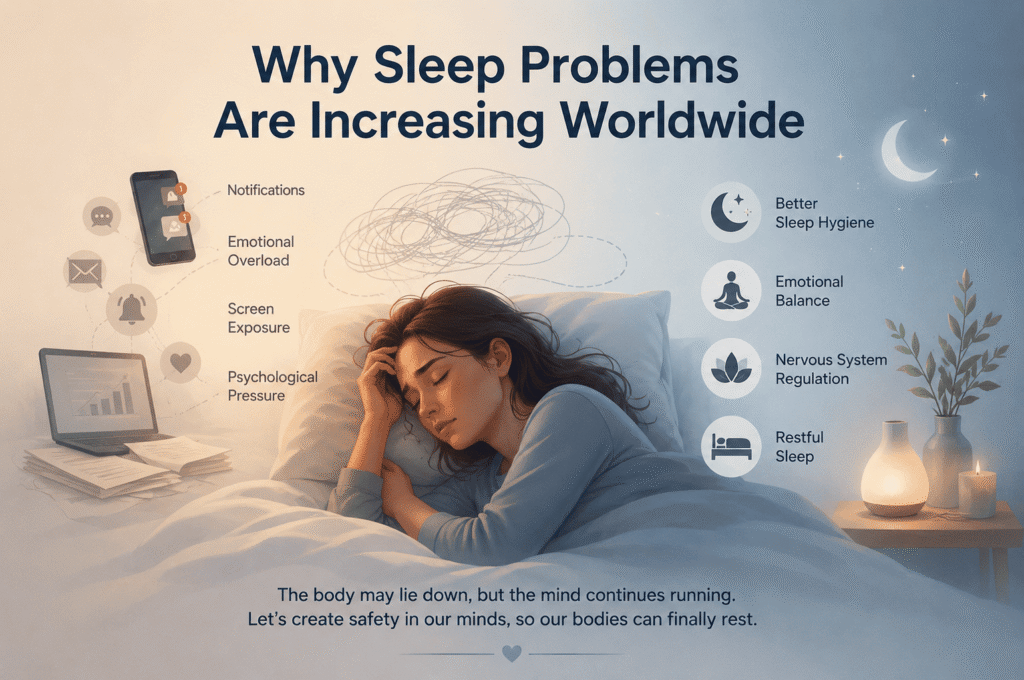
Why Sleep Problems Are Increasing Worldwide
Sleep has become one of the biggest wellness conversations globally. Recent wellness reports show rapidly increasing search interest around sleep hygiene, emotional stress, circadian rhythm disruption, sleep trackers, and anxiety-related insomnia. Researchers and wellness professionals are noticing a pattern: people are not only sleeping less, they are sleeping with more emotional tension than before.
Part of the issue comes from the modern lifestyle itself. Our nervous systems were never designed for nonstop notifications, emotional overload, constant screen exposure, and psychological pressure. Many people carry unresolved stress into bed without realizing it. The body may lie down, but the mind continues running like a computer with too many tabs open. Over time, the bedroom becomes psychologically associated with stress instead of safety. This creates a cycle where sleep itself becomes stressful.
Reddit discussions about insomnia increasingly mention emotional overwhelm, nervous system exhaustion, relationship stress, and burnout as root triggers for sleep disruption. Many users report waking frequently throughout the night, feeling hyper-alert, or experiencing vivid dreams after periods of emotional strain.
From a spiritual perspective, many traditions interpret this as energy imbalance. Whether someone uses spiritual language or psychological language, the experience is often similar: the body struggles to fully relax because emotionally, mentally, or energetically, it does not feel at peace.
What Does “Negative Energy” Actually Mean?
The phrase negative energy signs is often misunderstood. It does not always mean something supernatural or mystical. In many cases, negative energy refers to emotional tension, unresolved conflict, anxiety, emotional heaviness, environmental stress, or lingering emotional patterns that affect mental calmness.
Think of energy like emotional weather inside your environment. Have you ever walked into a room after an argument and instantly felt tension even if nobody said anything? Human emotions leave impressions on spaces, routines, and nervous systems. Chronic stress, grief, anger, fear, emotional suppression, or toxic environments can create a persistent emotional atmosphere that affects sleep quality.
Spiritually, many believe sleep is a vulnerable state where the body becomes highly sensitive to emotional frequencies and environmental energy. Scientifically, stress hormones like cortisol and adrenaline can absolutely interfere with deep restorative sleep cycles. So while different frameworks explain it differently, both agree on one thing: emotional imbalance disrupts rest.
This is why searches for phrases like sleep problems spiritual meaning, spiritual causes of insomnia, and restless sleep spiritual meaning continue rising online. People are trying to understand why exhaustion feels deeper than simple tiredness. They often describe waking up emotionally drained rather than physically refreshed.
Common Signs Negative Energy May Be Affecting Your Sleep
Constant Restless Sleep
One of the most common negative energy signs is restless sleep that never feels restorative. You may technically sleep for seven or eight hours yet still wake up feeling exhausted, emotionally foggy, or mentally overwhelmed. Your body rests physically, but internally it feels like your nervous system stayed active all night.
People experiencing this often describe tossing and turning, waking repeatedly, or drifting in and out of shallow sleep. Some notice sudden anxiety before bedtime without any obvious reason. Others feel emotionally uncomfortable as soon as they enter their bedroom. In spiritual wellness communities, this is sometimes interpreted as energetic imbalance or emotional heaviness surrounding the sleep environment.
Interestingly, many insomnia sufferers online describe sleep as a “body-level alarm state.” Several discussions highlight how unresolved stress and emotional hypervigilance kept their nervous systems activated even while trying to rest.
Waking Up Feeling Emotionally Heavy
Another overlooked sign of poor sleep energy is waking up emotionally depleted rather than physically tired. Some people wake with unexplained sadness, irritability, anxiety, heaviness, or mental pressure. This feeling can continue throughout the day like an invisible emotional fog.
This experience is often linked to chronic emotional stress and sleep disruption. When emotional tension accumulates without release, the nervous system remains partially alert during sleep. Instead of entering deep restorative rest, the brain stays semi-defensive. Imagine trying to recharge your phone while dozens of apps continue draining the battery in the background. That is what emotional overload can feel like during sleep.
Search trends around emotional burnout and sleep continue increasing because many people no longer separate emotional wellbeing from physical rest.
Nightmares and Intense Dreams
Dream activity can sometimes reflect emotional processing. During stressful periods, people often report vivid dreams, emotionally intense nightmares, recurring symbolic dreams, or waking suddenly from emotional dream states.
Spiritually, some interpret vivid dreaming as the subconscious attempting to process emotional residue or energetic imbalance. Psychologically, heightened stress hormones can increase nighttime awakenings and emotional dream recall. Either way, recurring disturbing dreams may indicate that emotional tension is not being fully released during waking life.
Many individuals discussing insomnia online mention increased dreaming during periods of anxiety recovery. Some experts note that REM rebound and emotional processing during sleep can temporarily intensify dreams when stress patterns begin shifting.
Feeling Uneasy in Your Bedroom
Have you ever entered your room and instantly felt mentally restless? Some people report unexplained discomfort, heaviness, irritability, or anxiety specifically inside their sleeping space. They may even sleep better in different rooms or unfamiliar places.
This pattern appears surprisingly often in insomnia discussions. One Reddit user described how sleeping in another room reduced their anxiety because their original bedroom had become mentally associated with stress and sleeplessness.
Spiritually, this is sometimes linked to stagnant or emotionally charged energy within the environment. Clutter, unresolved arguments, emotional memories, dark lighting, lack of airflow, and overstimulation can all affect how emotionally safe a room feels to the nervous system.
Sudden Sleep Anxiety Without Clear Reason
One major sign of bad energy affecting sleep is bedtime anxiety that seems irrational or difficult to explain. The body suddenly becomes alert at night even when physically exhausted. Thoughts race. The heart feels restless. Sleep starts feeling like pressure rather than comfort.
This phenomenon is increasingly recognized as sleep anxiety causes linked to stress conditioning. Once the mind begins associating bedtime with fear of not sleeping, anxiety itself becomes the sleep disruptor. Many insomnia sufferers describe this exact loop online.
Spiritually sensitive individuals may interpret this as emotional overload or energetic imbalance, while psychologists may frame it as nervous system hyperarousal. Both perspectives ultimately describe the same experience: the body no longer feels emotionally safe enough to deeply rest.
Spiritual Causes of Insomnia
Emotional Stress and Sleep Disruption
The strongest connection between spirituality and insomnia is often emotional stress itself. Emotional pain does not disappear simply because someone goes to bed. Suppressed emotions continue affecting the nervous system beneath the surface.
Chronic worry, heartbreak, grief, emotional burnout, workplace pressure, unresolved trauma, and relationship stress can create ongoing inner tension that interferes with rest. Modern sleep studies increasingly connect emotional overload with fragmented sleep quality and nighttime awakenings.
From a spiritual lens, unresolved emotional energy is believed to remain active within the body until consciously processed. This explains why some individuals feel mentally exhausted despite technically sleeping enough hours.
Unresolved Emotional Energy
Many people searching for spiritual reasons for disturbed sleep are actually describing unresolved emotional patterns. The body stores stress responses longer than people realize. Arguments, fear, emotional suppression, guilt, and anxiety can linger internally for weeks or months.
Sleep requires surrender. Yet emotionally overwhelmed individuals often remain subconsciously defensive. The nervous system behaves like a guard dog constantly scanning for danger. Deep rest becomes difficult because the body never fully exits survival mode.
This is why relaxation techniques alone sometimes fail. The deeper issue may involve emotional release, nervous system healing, and restoring emotional safety.
Clutter, Conflict, and Emotional Residue
Environmental energy matters more than most people realize. Bedrooms filled with clutter, emotional chaos, excessive technology, harsh lighting, or unresolved emotional memories can psychologically affect relaxation.
Think about how differently you feel inside a peaceful temple compared to a noisy crowded room. Environments shape emotional states. Spiritual traditions have emphasized this for centuries through practices involving cleansing, decluttering, incense, prayer, calming sounds, and intentional room arrangement.
Today, even sleep science acknowledges the importance of environment design for better rest quality.
Why Do I Wake Up Tired Spiritually?
Many people ask, “Why do I wake up tired spiritually?” The answer often involves emotional exhaustion rather than simple physical fatigue.
Nervous System Overload
The nervous system needs safety to enter restorative sleep. Emotional overload keeps the body in low-level alertness even during rest. This creates light fragmented sleep instead of deep recovery.
Modern life constantly stimulates the nervous system through screens, stress, uncertainty, emotional overload, and social pressure. Over time, the body loses its natural rhythm of tension and release. Sleep becomes interrupted, shallow, or emotionally draining.
Emotional Exhaustion During Sleep
Some people carry emotional heaviness into dreams without realizing it. Others mentally process stress all night through subconscious overthinking, emotional replaying, or anxiety-driven dreaming.
Instead of sleep functioning like emotional healing, it becomes another arena where stress continues operating silently. This often explains why emotionally overwhelmed individuals wake up feeling psychologically exhausted even after sleeping several hours.
Spiritual Reasons for Disturbed Sleep
Overthinking and Energy Drain
Overthinking is one of the most underestimated forms of energy drain. Constant mental activity consumes emotional energy the same way apps drain a phone battery.
When the brain never fully slows down, the body struggles to shift into deep parasympathetic relaxation. Many spiritually sensitive people describe this as mental energy overload or emotional congestion.
Hypervigilance and Emotional Sensitivity
Emotionally sensitive individuals often absorb environmental stress more intensely than others. Conflict, negativity, emotional tension, or chaotic environments may linger internally long after events end.
This sensitivity can make sleep especially difficult because nighttime removes distractions. Unprocessed emotions become louder in silence.
How to Clear Bad Energy Affecting Sleep
Create a Calming Sleep Environment
Your bedroom should psychologically communicate safety, calmness, and rest. Reduce clutter. Improve airflow. Use soft lighting. Limit overstimulating technology before bed. Create emotional separation between work stress and sleep space.
Current sleep wellness trends increasingly emphasize environmental sleep design because surroundings strongly influence nervous system relaxation.
Reduce Emotional Stimulation Before Bed
Late-night doomscrolling, emotionally intense conversations, work stress, and overstimulation activate the nervous system before sleep. The mind needs transition time between activity and rest.
Try replacing screen exposure with calming rituals like:
- Breathwork
- Meditation
- Gentle stretching
- Prayer
- Journaling
- Soft music
- Reading
Spiritual Practices for Better Sleep
Many people find emotional grounding through spiritual or mindful practices. These may include:
- Meditation
- Gratitude rituals
- Sound healing
- Incense or aromatherapy
- Energy cleansing practices
- Prayer
- Mindful breathing
- Journaling emotional stress
These rituals often work because they help signal emotional safety to the nervous system.
When Sleep Problems Require Professional Help
Not all insomnia has spiritual causes. Chronic sleep issues may involve medical, neurological, hormonal, or psychological conditions that require professional care.
Seek medical support if sleep problems involve:
- Persistent insomnia
- Sleep apnea symptoms
- Severe anxiety
- Depression
- Panic attacks
- Chronic exhaustion
- Night terrors
- Physical breathing problems during sleep
Spiritual wellbeing and professional healthcare can coexist together. Addressing emotional energy should complement-not replace-proper medical evaluation when needed.
Conclusion
Sleep is far more than a physical process. It reflects emotional balance, nervous system safety, environmental calmness, and mental wellbeing. Many people experiencing restless sleep spiritual meaning, sleep anxiety causes, or spiritual causes of insomnia are actually dealing with deeper emotional overload beneath the surface.
The body cannot fully rest when the mind feels unsafe, emotionally heavy, overstimulated, or chronically stressed. Whether you describe it as nervous system dysregulation, emotional exhaustion, or negative energy, the experience often points toward the same truth: inner peace deeply affects sleep quality.
Sometimes the solution is not forcing sleep harder. Sometimes it is creating emotional stillness, calming the environment, releasing unresolved stress, and helping the body feel safe enough to truly let go.
FAQs
1. Can negative energy affect sleep?
Many people believe emotional tension, stress, unresolved conflict, or heavy environments can affect sleep quality. Psychologically, stress and anxiety absolutely disrupt restorative sleep patterns.
2. What are common negative energy signs during sleep?
Common signs include restless sleep, vivid nightmares, waking emotionally exhausted, unexplained nighttime anxiety, feeling uneasy in the bedroom, and waking repeatedly during the night.
3. What is the spiritual meaning of restless sleep?
Spiritually, restless sleep is often linked to emotional imbalance, unresolved stress, energetic overload, or emotional sensitivity that prevents deep relaxation.
4. Why do I wake up tired spiritually?
You may be emotionally overwhelmed, mentally overstimulated, or experiencing chronic stress that prevents restorative sleep even if you technically sleep enough hours.
5. How can I improve sleep affected by emotional energy?
Focus on calming the nervous system through meditation, reducing nighttime stimulation, decluttering your room, emotional processing, journaling, and creating a peaceful sleep environment.
Sources & Trend References: Google Trends, Global Wellness Institute sleep reports, sleep trend analysis platforms, and recent insomnia community discussions